
VAR and Glory, Issue 2 (Matchweek 7)
If the Premier Leage this week was a brawl in the Marvel Universe, then Ange was the hero finding himself with lost superpowers—uttering to himself, "I always come back in the sequel."

City played like Ultron’s army, Spurs channeled Spider-Man’s chaos, and Arsenal once again mistook themselves for the Avengers, only to realize nobody called them to assemble.
Musings from “the Top”
The Premier League’s Big Six are basically the Avengers — if the Avengers spent half their time fighting each other and the other half arguing over TV rights. They’re trapped in a sequel series that’s run a few phases too long — bloated budgets, recycled storylines, and every club convinced they’re the protagonist. Each weekend brings new villains, soft reboots, and the occasional miracle goal that keeps the franchise alive just long enough for another reboot next August.
Chelsea 2–1 Liverpool
If Stamford Bridge were part of the Marvel Cinematic Universe, Saturday night was Civil War II: The VAR Saga. Two superteams with the same origin story — money, ego, destiny — clashing not over right or wrong, but over who gets top billing. Chelsea, the rebellious upstarts in fresh blue armor; Liverpool, the veteran heroes clinging to their mythos. Both walked in expecting to save the Premier League, and both left with scorch marks.The tone was set early. Moisés Caicedo, who once courted Liverpool before eloping with Chelsea in the summer transfer window, struck first — a thunderous hit from distance that felt less like a goal and more like a breakup text written in fire. It was Tony Stark-level pettiness. Liverpool reeled, their defense scrambling as Stamford Bridge shook like a CGI skyline.
But the Marvel multiverse always gives its veterans a comeback scene. Early in the second half, Cody Gakpo rose above the chaos, nodding in the equalizer — a shot so inevitable it should’ve come with a Hans Zimmer crescendo. For a moment, the script flipped: Liverpool pressing, Chelsea bending, Arne Slot smirking like a hero rediscovering his origin power. The Reds looked poised for the classic third-act redemption.
And then came the twist — the one the Football Gods in Marvel’s writers’ room live for. Ninety-five minutes on the clock, everything level, chaos reigned. Estêvão, an 18-year-old substitute with the aura of a Phase One protagonist, sliced through the box and buried the winner. It wasn’t just a goal; it was the MCU announcing a new franchise. Stamford Bridge exploded, blue fireworks, limbs everywhere, and Enzo Maresca celebrated like a man briefly possessed by the Spirit of Stan Lee — so much so that the referee promptly sent him off for excessive enthusiasm.
Liverpool staggered away, beaten not by brilliance but by narrative momentum. Their stars — Salah, Núñez, Szoboszlai — flickered without fusing, like heroes out of sync across timelines. Slot called for order; the gods gave him irony. Even their late set pieces carried the energy of a superhero returning for one last swing, only to drop the hammer on his own foot.
Chelsea, for their part, didn’t outplay Liverpool — they out-chaosed them. This was a film directed by Taika Waititi: messy, hilarious, unexpectedly heartfelt. Caicedo’s redemption arc, Estêvão’s debut glory, Maresca’s red-card meltdown — all of it pure Marvel storytelling, built on hubris, youth, and improbable timing.
Tottenham 2–1 Leeds
At Elland Road, this wasn’t just football — it was a Marvel crossover episode between Guardians of the Galaxy and WandaVision, equal parts chaos and charm. Thomas Frank led Tottenham like a dour Danish Nick Fury, herding his band of misfits into yet another high-stakes, low-logic adventure. Leeds, fresh from a run of home heroics, entered like scrappy vigilantes ready to overthrow the Premier League’s natural order. For ten glorious minutes, they did — pressing like the Avengers in full assemble mode, hunting Spurs across every blade of grass.
And then… they stopped. Whether it was fatigue, overconfidence, or the Football Gods whispering in their ears, Leeds backed away from the full press. The energy that made them terrifying at the open dissolved into caution. It was their fatal narrative flaw — the superhero who forgets his own powers. Tottenham, sensing the drop, spread their wings.
Mohammed Kudus — part Quicksilver, part Loki — began slashing through the right side, all flicks and feints, until Mathys Tel finished a deflected chance that looked like a special-effects sequence. The away end erupted. Frank grinned, that half-mad, half-beatific smile of a man who knows his team is a paradox that might somehow work.
Leeds clawed back soon after. Noah Okafor pounced on a rebound, the shot of a man who refused to be cut from the film. Elland Road ignited again, roaring for a twist in the script. But Frank’s men — those chaotic Guardians in white and navy — thrive in disorder. In the second half, Kudus struck again, weaving through defenders and curling a deflected shot that sent the plot hurtling back toward North London glory.
Leeds tried to reignite their press too late. The tempo was gone, the rhythm broken. Guglielmo Vicario transformed into Doctor Strange in goal, plucking shots from alternate timelines, and every Tottenham clearance seemed guided by divine comic timing. When the final whistle blew, Leeds lay sprawled in their own subplot — brave, valiant, but ultimately victims of their own hesitation.
Leeds’ downfall wasn’t in effort but in retreat. You can’t win in a Marvel film by switching to defense at the beginning of the act. Spurs didn’t out-press them — they out-believed them. And in the great Premier League multiverse, belief is the most dangerous superpower of all.
Arsenal 2–0 West Ham
At the Emirates, Arsenal didn’t just play a football match — they staged an origin story. The whole afternoon felt like the opening act of a Marvel film: sleek visuals, swelling soundtrack, and a hero haunted by his past. In this one, Declan Rice was the reluctant Avenger returning to face his old team — the apprentice who left the dojo and came back as the master.The script practically wrote itself. Thirty-eight minutes in, Rice struck — not with rage, but with inevitability. It wasn’t a thunderclap; it was the precise flick of Iron Man’s repulsor, aimed straight at the heart of his former comrades. The goal celebration was muted, respectful, like a superhero who knows he’s just blasted his best friend off the bridge. The West Ham audience members booed, of course, but even they knew what they were watching: the inevitable sequel where the student surpasses the mentor.
Then the tone shifted. Martin Ødegaard, Arsenal’s calm field general, went down clutching his knee — the Captain America moment where the hero takes one hit too many. The stadium fell silent, the music dropped out, and for a moment, it felt like the script might turn tragic. He limped off to applause, the Football Gods of the Marvel cosmos scribbling in the margins: injury subplot incoming.
But Arsenal didn’t flinch. They’ve moved past the era of moral victories and monologues about “trusting the process.” They closed ranks, found their rhythm, and waited for the next cue. When Bukayo Saka stepped up to take the penalty in the 67th minute — earned by Timber’s charge into the box — it was pure symmetry: young hero, clean heart, steady hand. The strike was clinical, low, final — the kind of moment that cuts straight into the trailer.
West Ham fought gamely, the B-team of this cinematic universe — brave, scrappy, but clearly written out of the plot by the 80th minute. They pressed, they fouled, they ran themselves into exhaustion, but Arsenal’s composure never cracked. Every clearance, every triangle, every sideways pass was a flex of quiet authority.
When the whistle blew, Arteta’s men didn’t roar — they nodded, like veterans who’ve seen the credits roll before. Arsenal had written a clean episode: revenge, resilience, restraint. The Emirates lights dimmed, and you could almost hear the voiceover: “In a league ruled by chaos, one team remembered the script.”
For this week, at least, Arsenal were the MCU’s most grounded heroes — no magic stones, no multiverse collapses, just tactical precision and moral clarity. The gods of football approved the edit, but you know how Marvel works: there’s always a post-credits scene, and it usually hurts.
Brentford 0-1 Manchester City
Yesterday the Premier League multiverse tilted just slightly in Manchester City’s favour. Erling Haaland broke the deadlock in the 9th minute — bulldozing past Sepp van den Berg and burying a low strike beyond Kelleher — marking that rare feat of scoring at yet another ground in his vault.
City’s dominance in the first half was absolute: every pass seemed electric, every opening probed with purpose, and every Brentford counter shut down before it could breathe. But the script demanded tension. Midway through, Rodri limped off with a hamstring injury — the spine of City’s engine stuttering under invisible weight.
In the second half, Brentford rallied, raining aerial threats and pressing with desperation. They nearly stole the scene — Igor Thiago had a golden chance blocked; Kevin Schade pressed Donnarumma in the final minutes. Yet City, bruised but unbroken, held on. In the comics, that’s the moment when the hero blows out his mask and stares back at the darkness.
Pep’s 250th Premier League win came at a cost; City might’ve added gloss, but the hurt in midfield was real. Haaland’s streak, the vulnerabilities exposed, the late dash for survival — all are key ingredients for a robust sequel.
Manchester United 2-0 Sunderland
The stage felt primed for drama: United, under the weary gaze of mounting scrutiny on Rúben Amorim, needed redemption. They answered early. Mason Mount struck with composure to settle nerves, and Benjamin Sesko—in his first home goal for United—extended the lead before half-time.
Sunderland, despite flashes of intent, never truly threatened after VAR intervened at 45+6’ to overturn a late first-half penalty. In the second half, the Black Cats pushed, but Senne Lammens, on his debut, stood firm—making key saves, keeping the margin intact, and earning clean sheet honors.
United’s first-half control was decisive. They attacked with purpose, moved the ball with fluency, and occasionally overran Sunderland’s backline. The victory does more than three points — it buys Amorim breathing room, reassures fans, and asserts that sometimes a manager’s best move is to survive first.
In the multiverse where every bad run demands a turning point, this was United’s small reset. The gods may have plans for more chaos, but for now, the red half of Manchester welcome a rare night of order.
Other Scribbles in the Margins
Newcastle 2–0 Nottingham Forest
At St. James’ Park, this was less a fixture and more a cosmic reckoning. Newcastle entered the arena like the Avengers assembling — powerful, confident, dangerous—even before the opening whistle. Against a Nottingham Forest side still in disarray under new pressures, the visitors looked like underdogs auditioning for a tragic subplot.
In the 58th minute, Bruno Guimarães unleashed a screamer from distance that struck the net like a repulsor blast—unexpected, devastating, impossible to deny. Newcastle’s crowd roared, the stadium shuddered, and the match seemed like it might be over. But the gods of football rarely settle for neat scripts.
Forest fought back, pressing, probing, clinging to hope. But in the 84th minute, the narrative’s final twist came: a penalty, calmly dispatched by Nick Woltemade, his finish crisp as any shield-throw. Two goals, two distinct signatures—one cosmic, one clinical. Forest, despite bursts of energy, never truly threatened to rewrite the ending.
As the whistle blew, Newcastle’s stars lifted arms to the night sky, believing (for a moment) in their own mythology. Forest trudged off, ghosts of ambition in retreat. The Football Gods leaned back, satisfied: nothing too tidy, no mercy for the nervous. The underdog narrative was buried; the hero’s arc had returned to Tyneside.
Everton 2–1 Crystal Palace
This was a tale of fate bending at the last second—because in the MCU, someone always gets a comeback. Palace started like surgical superheroes: precise passing, dominance, a lead through Daniel Muñoz that made them look like they’d plotted the whole script. The crowd, believing, held its breath.
But halftime murmurs shift universes. Everton, quiet in the wings, began climbing back. In the 76th minute, Iliman Ndiaye converted a penalty with calm conviction—like Iron Man quietly recalibrating his suit mid-battle. The balance teetered. Palace pressed, lungs heaving, as the stadium held a collective gasp.
Then, in stoppage time, Jack Grealish intervened. Not with thunder, but with uncanny luck—a deflected touch, a moment’s hesitation, and suddenly the net bulged. The script flipped, credits rewrote. Palace, who’d dreamed of perfection, stood dumbfounded. Everton celebrated like side characters who got the ending they never believed possible.
The gods of the match twisted their smirks. Every dominance can be fragile. Every lead, temporary. In the Premier League multiverse, endings are never safe until the final whistle.
Aston Villa 2-1 Burnley
At Villa Park, it wasn’t just a football match — it was Aston Villa: Age of Unai. The home side arrived in full blockbuster mode, all slow-motion confidence and orchestral swagger. Burnley, meanwhile, looked like the B-team villains you meet halfway through the film — angry, organized, but hopelessly underfunded.
From kickoff, Villa hummed like Tony Stark’s lab — bright, noisy, and fueled by expensive toys. Ollie Watkins struck early, the kind of finish that made you wonder if he’d been bitten by a radioactive striker. His movement was pure superhero choreography: dart, pause, vanish, goal. Burnley tried to respond, but every pass looked like it was written by a nervous intern in the Marvel writers’ room.
Then came Burnley’s moment — Lyle Foster muscling through for an equalizer that landed like a villain’s monologue. For five minutes, they believed they could rewrite the ending. The crowd sensed it too, that creeping fear that this might be the day the plucky underdogs steal the show. But Villa’s new narrative engine doesn’t do sentimentality.
Moussa Diaby reclaimed the lead with a strike that could’ve split a wormhole, and Leon Bailey sealed it late with a goal so audacious it should’ve come with a CGI budget. The Holte End roared, and you could practically hear the narrator: “They doubted him, they mocked him, and still, Unai Emery built the machine.”
Burnley left with soot on their capes, Villa left with three points and another chapter in their ever-growing superhero franchise.
Because in the Premier League Cinematic Universe, Aston Villa aren’t just climbing the table — they’re building their own Avengers Tower, one victory montage at a time.
Wolves 1-1 Brighton
At Molineux, this wasn’t your average fixture — it was Wolves: Fractured Destiny. Wolves, desperate for their first win of the season, entered like a team that had just found a prototype Infinity Stone: raw potential, volatile energy, and everyone watching to see if they’d blow it. Brighton arrived like scrappy time-travelers, always lurking, always plotting, always believing there’s a pathway out when all seems lost.
Early chaos followed. Wolves’ manager Vítor Pereira was sent off in the 20th minute for kicking a ball into the officials’ dugout—classic MCU moment where the mentor’s fall signals the turning point. Almost instantly, Wolves struck. Marshall Munetsi’s thunderous volley struck the crossbar and careened off Brighton’s keeper Bart Verbruggen into the net—an own goal so cruel it felt scripted by the multiverse itself.
For seventy minutes, Wolves held — defences stiff, lines compact, a fortress built under fire. Brighton probed, pressed, forced the magic tricklers to whisper incantations. But in the 86th minute, Jan Paul van Hecke rose highest and nodded home an equaliser. The stadium thundered. The ledger shifted. The gods grinned.
Wolves, for all their fight, watched the point slip through their grasp. The first victory remains elusive. Brighton, once again, proved they haunt the margins — timing their return like anti-heroes arriving just in time. The match ended 1–1. The script flipped twice. In this Premier League multiverse, endings are always unstable, and no underdog ever concedes fate quietly.
Friday Night Lights
Friday night in small-town America is sacred: stadium lights blaze over the local high school (American) football field, and the whole community turns out—parents, alumni, cheerleaders, the band, and even folks who don’t care much about football but care deeply about their community and the ritual. It’s the intersection of sport and civic religion.
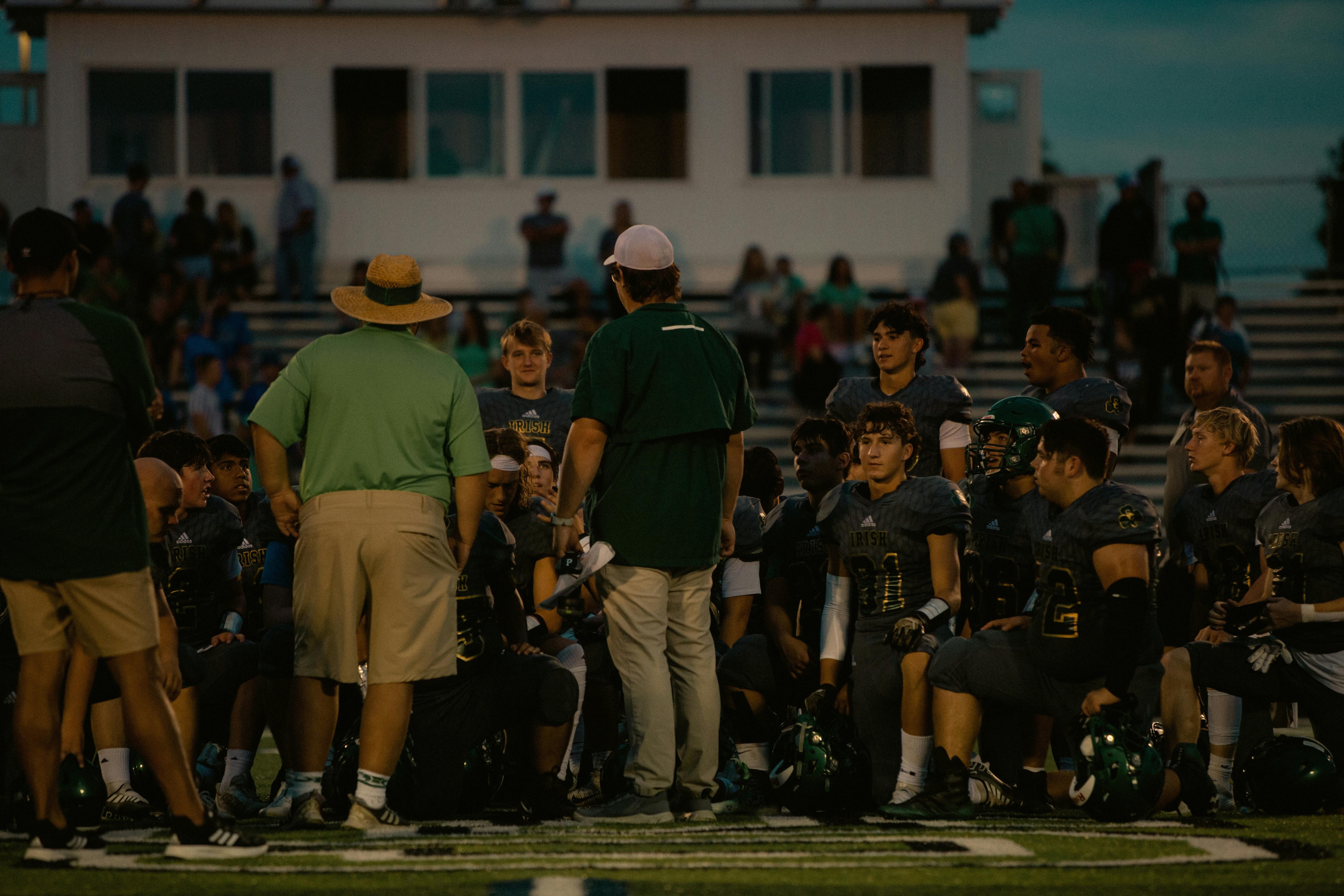
In England pubs fill early, fans clock out of work with scarves under their jackets, and the glow of floodlights fill historic grounds for a match that the Premier League has deigned to grant us. But regardless of which side of the pond you’re on, millions of sports fans are cosmically linked by their shared passion for sport underneath the aura of high-powered stadium lights.
Bournemouth 2-1 Fulham
Wind and rain was swirling at the Vitality Stadium leading to a soaked match. But Fulham came out ready to direct traffic in the foul weather in their bright neon green
safety vestsaway kits. Fulham’s away kit is so bright, pilots are using them as a backup runway lights. Wait. Wait… Astronauts didn’t need to stream the match, they could pick out the players directly from the International Space Station.Ok, restarting this match summary…
At the Vitality Stadium, this wasn’t a match — it was Ant-Man vs. The Falcon: Battle for Mid-Table Earth. Two clubs often treated as side characters got top billing for one chaotic afternoon, and the Football Gods of the Marvel multiverse were clearly in a playful mood.
Bournemouth came out like underdogs who’d stolen Tony Stark’s playbook — compact, clever, all gadgetry and hustle. Fulham, decked in their neon away kit that glowed like a malfunctioning Stark reactor, pressed high for ten minutes, then immediately ran out of plot armor. From that moment on, it was all Cherries, buzzing around with the reckless optimism of heroes who don’t realize they’re supposed to lose.
Dominic Solanke opened the scoring — not with a superpower, but with pure persistence, bundling the ball in like a man too stubborn to fade out of the franchise. Fulham equalized against the run of play through Andreas Pereira, a moment of brief cinematic symmetry — the villain punching back right before the twist. But Bournemouth’s reply came fast and furious: Justin Kluivert slicing through the box to fire home the winner, channeling every ounce of his father’s legacy and every ounce of comic-book redemption.
Fulham, exhausted, flung themselves forward in the final minutes, but the script was sealed. The crowd roared, the camera panned to the touchline, and Bournemouth manager Andoni Iraola raised his fist like a man who’d just survived a mid-season crossover.
The credits rolled on a 2–1 victory — no gods, no billion-pound budgets, just grit and chaos. In the grand Marvel tapestry of the Premier League, Bournemouth aren’t Iron Man or Thor. They’re Scott Lang: underestimated, self-aware, always one montage away from stealing the show.
And somewhere, up in the celestial VAR booth, the Football Gods smiled. Not every hero saves the world — some just save three points.
Monday Night Football
In America, Monday night is a national event. Born in 1970, it marks the end of the NFL week, and is a chance for the entire country to come together to absorb a big-production event with star-filled theme songs, halftime concerts, military flyovers, and endless (and I mean endless) mesmerizing graphics. In the UK, Monday Night isn’t a weekly affair, and when the football gods deign to schedule a match, it is often much more subdued. The bravest of fans brave the cold and rain to reach the grounds. The rest watching at home or at their local pub tune into a cathedral of analysis targeting mid-table teams or if you’re lucky, perhaps a derby. But make no mistake, the match is different. Fans from everywhere around the world tune in to watch commentators dissect tactics with telestrators as if decoding ancient hieroglyphics.
MNF is where America’s over the top Hollywood glitz slams into the UK’s slow-burn football obsession and professorial analysis.
Sadly, the Premier League deemed us unworthy to schedule any Friday night matches this week.
The Premier League as the cast of the Marvel Universe
Manchester City – Thanos
Too powerful, too many weapons, and everyone else spends entire seasons trying to stop them collecting more trophies Infinity Stones.
Liverpool – Thor
Once the undisputed god of thunder, capable of summoning storms at Anfield. Still mighty, still feared, but lately battling inconsistency—sometimes delivering lightning bolts, other times misplacing the hammer.
Arsenal – Spider-Man
Bright, youthful energy, dazzling skill, but still learning how to turn promise into consistent power. Forever almost saving the city.
Manchester United – Hulk
Then: devastating, uncontrollable force.
Now: flashes of rage, but often smashing their own dressing room instead of the opposition.
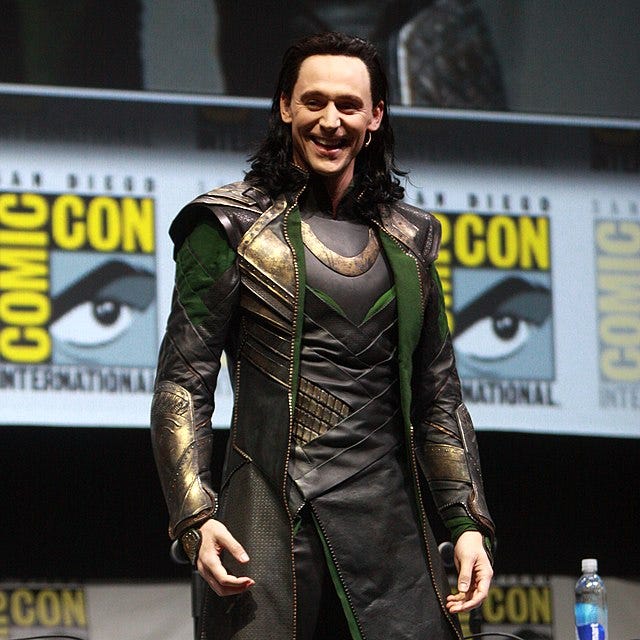
Chelsea – Loki
Shape-shifting, chaotic, unpredictable. Some days they’re a god, some days they’re a punchline—never boring, though.

Tottenham Hotspur – Scarlet Witch
Overflowing with potential and capable of reshaping reality when everything clicks, but just as likely to unravel spectacularly under pressure. Spurs fans know the chaos and heartbreak all too well.
Newcastle United – Doctor Strange
Armed with mysterious new funding powers, opening portals into new dimensions of possibility—could tilt the multiverse if they figure out how to master it.
Aston Villa – Rocket Racoon
Scrappy, resourceful, clever with their tools, and somehow regularly punching above their supposed weight. Masters of making the most from less.
Leeds - Wolverine
Fierce, stubborn, always fighting back, even when battered. They might go down. They might look dead. But somehow they never seem to stay that way.
Brighton – Mantis
Underestimated, seemingly gentle, but capable of stunning impact when least expected.
Sunderland - Magneto
Charismatic, but polarizing. Fueled by pure menacing passion and rivalry, especially when facing Newcastle.
Fulham – Hawkeye
No superpowers, just grit, accuracy, and occasional moments. Does he really belong in the top tier of Avengers? No. Kinda tough to say. Everyone forgets they’re there… until they pop up with one deadly shot that ruins someone else’s day.
Crystal Palace – Groot
Endlessly resilient, hard to hate, but limited in vocabulary (“We are Palace”). Loved more than would be expected.
West Ham – Drax
Literal to a fault. Blunt and no-nonsense. Loves a scrap, but doesn’t always get the joke.
Everton – Deadpool
Chaotic, self-destructive, somehow always surviving implosions. Breaking the fourth wall with gallows humor every relegation battle.
Nottingham Forest – Captain America
Old-school hero brought back to the modern age. Tradition and nostalgia wrapped in a badge.
Wolves – Moon Knight
Chaotic, unpredictable, flashes of brilliance mixed with self-destructive spells. You never know which personality will show up week to week.
Bournemouth – Ant-Man’s Ants
Small, industrious, underestimated, but capable of swarming opponents when least expected.
Brentford – Rocket Raccoon
Street-smart, underestimated, with clever tricks and a touch of mischief. Can punch way above their weight.
Burnley – Howard the Duck
Out of place among the cosmic heavyweights, but somehow still hanging around the big stage, refusing to disappear.
A Howard the Duck Post Script: The football gods have a soft spot for Howard the Duck. Much like George Lucas betting the galaxy far, far away on a cigar-smoking waterfowl, clubs sometimes pin their season’s hopes on a signing that makes absolutely no sense. Lucas got Howard, Everton got Salomón Rondón. Both flopped spectacularly. Rumor has it that Lucas was so strapped for cash after the 1986 film’s flop that he sold off part of his computer graphics division to keep the lights on at Skywalker Ranch. That division became Pixar. And just as Lucas was redeemed by his accidental creation of one of the most important cinematic powerhouses of the last four decades, clubs sometimes stumble into brilliance after a disaster—buying a player to “steady the ship” who instead sparks a renaissance. Think of it this way: Howard had to waddle so that Toy Story could soar. Surely there is a January panic signing that waddles onto the pitch so your Champions League run can fly.Cosmic Ironies & Moral Lessons
Cosmic Ironies & Moral Lessons
Manchester City’s 1–0 win at Brentford saw Haaland score his ninth straight goal, but the game’s undercurrent was Rodri limping off in the first half with a hamstring issue—reminder: even gods bleed.
At Stamford Bridge, Chelsea’s Estêvão turned the lights out on Liverpool with a 95th-minute winner after Caicedo’s early thunderbolt and Gakpo’s equaliser — a microcosm of this season so far: youth rising, the titans scrambling, critical games being decided after 90’.
Everton ended Crystal Palace’s 19-match unbeaten run via Jack Grealish’s 93rd-minute strike, having earlier drawn level through a composed Iliman Ndiaye penalty — a reminder that in this league, no matter how smooth the script, the epilogue often writes itself. Did I mention something earlier about games being decided at 90’+? This game saw Palace drop from 3rd in the table down to 6th. Ouch.
The past weekend illuminated a growing pattern: squads feel threadbare, stars carry burdens, and late drama is the new normal — injuries like Rodri’s exacerbate imbalance, while fixtures demand miracles, not consistency.
Looking Ahead (Insofar as the Future Can Be Predicted Before Chaos Ensues)
Manchester City will probably win again, but only after toying with the gods by conceding first to someone who hasn’t scored since August.
Arsenal’s injury list will expand by one, shrink by two, and confuse everyone by their next press conference.
Chelsea, having discovered late winners are addictive, will spend the week trying to recreate that 95th-minute adrenaline — expect either ecstasy or a self-inflicted VAR tragedy.
Liverpool will look brilliant for 70 minutes and then lose their shape like a collapsing Jenga tower, prompting Arne Slot to invent a new formation involving seven midfielders.
Tottenham under Thomas Frank will appear serene until a single deflection tests his Danish calm — cue philosophical quotes about entropy and expected goals.
Aston Villa will continue their low-key hero arc, rescuing points in ways that seem improbable yet mathematically consistent with Unai Emery’s sorcery.
The relegation fight will stay gloriously indecisive, with at least one manager reminding us that “it’s still early” even as the pressure on their contract insists it isn’t.
And somewhere in all this, the Football Gods will whisper: “You think you’ve seen chaos? Wait until next matchweek.”
and speaking of next matchweek:
The International Break
The Premier League gods rest — not out of mercy, but out of spite. We now enter the two-week void where England plays Latvia, everyone pretends to care about UEFA coefficient math, and half the league’s best players mysteriously “pick up knocks” during friendlies. It’s football’s equivalent of a mid-season dental cleaning: necessary, joyless, and destined to make us long for the pain of club chaos again.
While the International Break is a challenge for many football fans, some context may be in order: Guardians of the Galaxy Vol. 3 (2023) dropped six years after Vol. 2 (2017). There’s waiting for your entertainment to return. Then there’s waiting for your entertainment to return.
Post-Credits Scene: Phase One – The Premier League Multiverse of Madness
Fade in: the Etihad, empty now, floodlights cooling to blue. A single ball rolls to a stop on the halfway line — faint thunder in the distance. The voiceover begins:
“The balance is shifting again.”
Cut to Liverpool’s dressing room — Arne Slot ands before a whiteboard glowing with tactical hieroglyphs, murmuring like a scientist who’s just found the wrong formula but refuses to stop experimenting. Smash cut to Stamford Bridge, where Enzo Maresca still argues with the fourth official in slow motion, red card gleaming like an Infinity Stone.
Meanwhile, at the Emirates, Declan Rice stands alone under the floodlights, the former hero now full villain to half of East London. Across London, Thomas Frank finishes his post-match interview. The reporters prod about his unpredictable Tottenham side. He smiles, that measured Danish half-smile — the kind that says he’s already thought five moves ahead.
“Football is order pretending to be chaos,” he says softly. “You just have to know which part to trust.”
And in Manchester, Ruben Amorim wipes his hands, staring into the camera with the faint smile of a man who knows this is the first act of a redemption arc.
The Football Gods — unseen cosmic beings who moonlight as Marvel script editors — gather in their celestial VAR booth. They sip from goblets of espresso and argue over which subplot deserves a sequel. One of them sighs:
“Let them have hope. It makes the chaos taste sweeter.”
The screen flickers and then fades to black.
Then, out of the dark six simple words arise:
VAR and Glory will be back…
…
(…after the international break)
Fade again to black.